

New Advisory Committee Members
The Weatherhead Center is pleased to announce four new members of our Advisory Committee, the external governance board that advises on strategic direction. David Battat, Paula J. Dobriansky, Juan Enriquez, and Saumitra Jha join a distinguished group of individuals from across academia, government and policy sectors, and private business. Meet our newest members below:
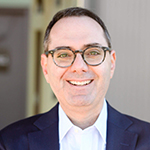
David Battat (’91) has served as CEO of several medical device companies, developing innovative technologies for oncology, minimally invasive surgery, and critical care. A deeply engaged Harvard volunteer, David serves as the president of the Harvard Alumni Association, having previously served on its Executive Committee and as an elected director. A 9/11 World Trade Center first responder, he cofounded the Harvard Alumni Disaster Preparedness and Response Team. David graduated magna cum laude from Harvard College with an AB in government and received his JD from Columbia Law School. After law school, he clerked for then-Judge Sonia Sotomayor.
Q: How have you seen the values and interests of Harvard Alumni change or evolve over time?
A: The fundamental values of curiosity and a desire to understand the world around them have remained remarkably consistent. What has changed dramatically is the alumni community itself. It has become much more global and much more diverse—in geography, background, profession, and experience. These perspectives have enriched the intellectual vitality of both the University and the alumni community.
Q: You have many different activities and titles, both professional and volunteer. Which activities do you find to be the most impactful and rewarding?
A: For me, it's about the chance to work alongside people who are focused on tackling the world's most global problems with rigor. That has been a constant across all of my activities—and it's why I'm honored to join the Advisory Committee of the Weatherhead Center for International Affairs.
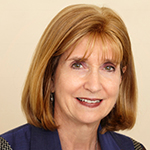
Ambassador Paula J. Dobriansky (MA ’80, PhD ’91), a foreign policy expert and diplomat specializing in national security affairs, is vice chair of the Atlantic Council’s Scowcroft Center for Strategy and Security. She brings over thirty years of government and international experience across senior levels of diplomacy, business, and defense. Dobriansky has held many Senate-confirmed, senior-level positions in the US government, including director of European and Soviet Affairs at the National Security Council, deputy assistant secretary of state for human rights and humanitarian affairs, and undersecretary of state for global affairs. She was also the President's Envoy to Northern Ireland from 2007–2009 and received the Secretary of State's highest recognition, the Distinguished Service Award, for her contributions to the peace process. Ambassador Dobriansky received an MA and PhD in Soviet political and military affairs from Harvard University.
Q: How have your thoughts on the importance of diplomacy evolved over your long career in government and business?
A: I have always believed in the importance and practice of diplomacy. Diplomacy is crucial to the conduct of international relations. There are many foreign policy tools which can be used to advance our national security interests, but diplomacy is always one which must be considered. Both Richard Armitage and Madeleine Albright asserted that when dealing with complex issues, "it is sometimes necessary to talk to both adversaries as well as friends." That's diplomacy!
Q: Apart from the US-Iran war, what are the global challenges that you find yourself thinking about most?
A: The current geopolitical environment is fraught with significant challenges. I am especially concerned about Russia's unprovoked and illegal aggression in Ukraine, China's political and military claims on Taiwan with assertions of the use of force, and the militarization of the Arctic.
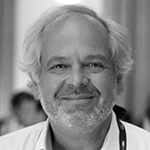
Juan Enriquez (BA ’81, MBA ’86) is a leading authority on the economic impact of life sciences and brain research on business and society as well as an entrepreneur and venture capitalist. He is the author and coauthor of multiple bestsellers including As the Future Catches You: How Genomics Will Change Your Life, Work, Health, and Wealth (1999), The United States of America: Polarization, Fracturing and Our Future (2005), Evolving Ourselves: Redesigning Humanity One Gene at a Time (2015), and Right/ Wrong: How Technology Transforms Our Ethics (2020). He graduated from Harvard with a BA and an MBA, with honors. He was the founding director of the Harvard Business School's Life Sciences Project and was a research affiliate at MIT’s synthetic neurobiology lab.
Q: How does your extensive experience in biotech and entrepreneurship bear on international relations in today’s context?
A: Historically, the ability to develop or adapt new technologies often determined which countries became powerful and which faded into oblivion. But the time to impact has shrunk dramatically. New technologies now allow a dozen kids, working from home, to develop the economy of a mid-sized country in a few years. And then there are behemoths like NVIDIA, whose market cap exceeds the yearly GDP of all but two countries in the world. Who holds power—and where—depends on how entrepreneurial your smart folks are.
Q: What do you see as the next big developments or disruptors in the life sciences field?
A: As I went to college, the digital revolution was just emerging. I was too focused on developing countries and missed the boat. As I wrote about why countries appear and disappear, I realized that we were just beginning to read the code of life, so I changed my specialty from international affairs, development, and economics to life sciences. We are now moving from reading life’s code to writing and editing it. This will have as much of an impact as AI on what lives on this planet. Already Darwin’s basic drivers of what lives and dies—natural selection and random mutation—are superseded by our desires. Only 3 percent of mammals are wild—we prefer cats and dogs, sheep and cows, to lions and tigers. We prefer wheat and roses to weeds and wild plains. And in terms of random mutation, you do not go hunting for wild vaccines, you engineer cells to fight cancer, or use CRISPR to engineer treatments for genetic diseases. This implies we have taken direct and deliberate control over large swaths of evolution. We, not nature, increasingly decide what lives and dies. And what form these creatures take.
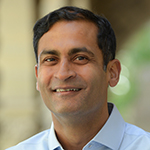
Saumitra Jha is an associate professor of political economy at Stanford’s Graduate School of Business, a senior fellow at the Freeman-Spogli Institute for International Affairs and the Stanford Institute for Economic Policy Research, and convenes the Stanford Conflict and Polarization Lab. He is a faculty fellow at the Center for Advanced Study in the Behavioral Sciences and former Academy Scholar at the Weatherhead Center for International Affairs at Harvard University.
Q: How did your time as an Academy Scholar influence your early career?
A: My time as an Academy Scholar had a dramatic impact on my early career. I developed lifelong ties of friendship and mentorship. I loved the interdisciplinary nature of the community, and very much appreciated the chance to learn from my fellow Academy Scholars and the embarrassment of intellectual riches provided by the broader Harvard environment. I also spent a part of my time as a Scholar conducting fieldwork in erstwhile medieval ports around South Asia, Malaysia, and east Africa, as well as examining historical archives in India and the UK, developing my dissertation into a series of ideas and papers that continue to shape my research trajectory.
Q: What are your current research projects?
A: My research focuses on how we can use financial, economic, and organizational ideas and approaches from history to mitigate violent conflict and build broad political support for policies that benefit the common good. In particular, I am currently working on four main research themes. These include examining how financial innovations and trading opportunities mitigate or exacerbate conflict; how the strategy of nonviolent protest works and why it often also fails; the role of "apex corruption": understanding the role of corruption among focal leaders in undermining democratic values, and what we can do to counteract it; and a book project with Steven Wilkinson on Leaders in Conflict, on the conditions under which nonelite individuals can develop the agency to make a difference in history and politics.