

Weatherhead Research Cluster on Identity Politics
Global Scholars’ Network on Identity and Conflict
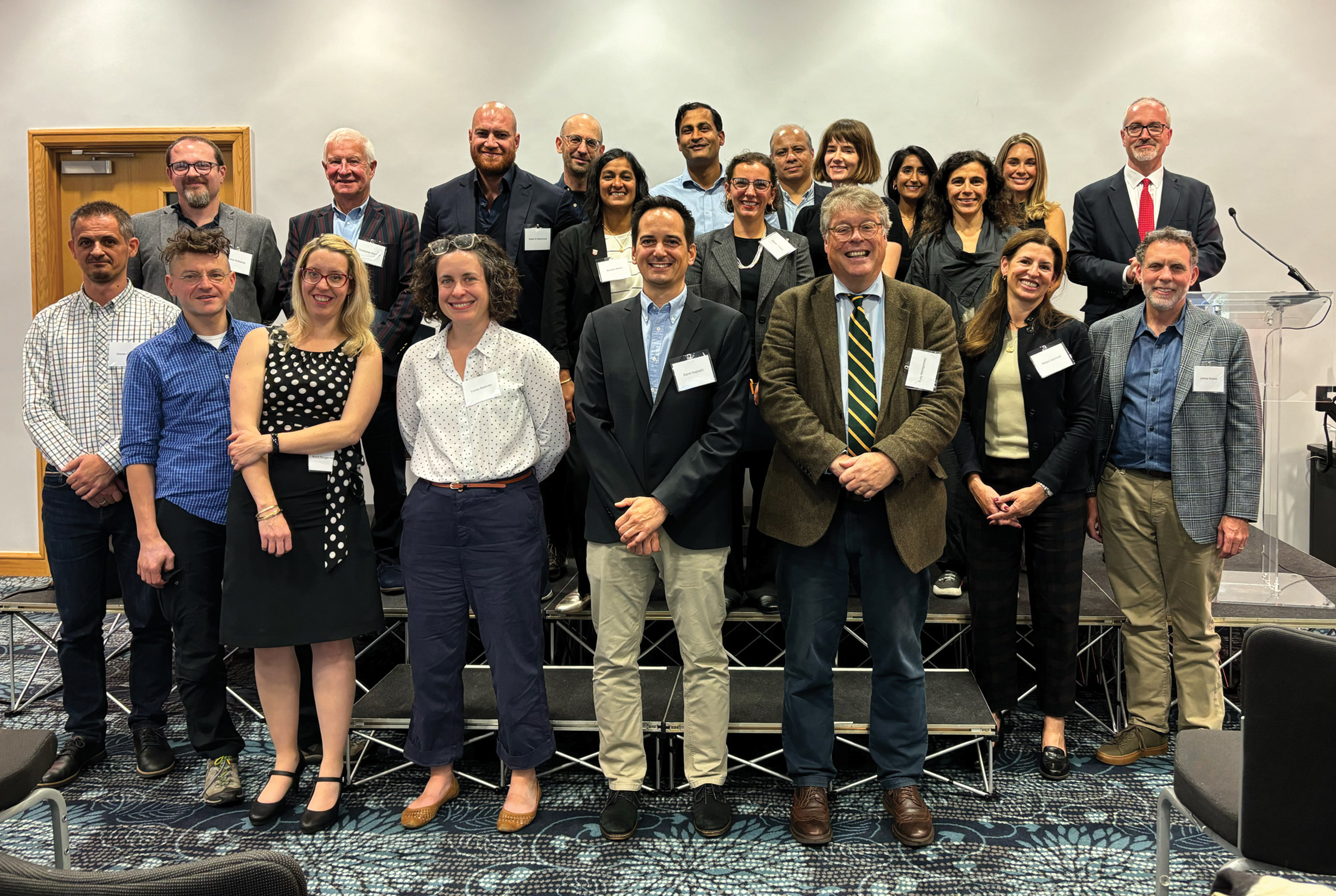
Northern Ireland was a fitting location for a gathering of scholars and practitioners deeply interested in the study of peacebuilding and reconciliation after violent conflict. The second annual Global Scholars’ Network on Identity and Conflict (GSNIC) conference took place at Queen’s University Belfast on September 20 and 21, 2024.
The conference, titled Leaders Making Peace: Incentives Toward Post-Conflict Peacebuilding, brought together scholars and practitioners from around the world to engage with several key questions: When and why do political elites and other key actors promote intergroup peacebuilding? Under what conditions do leaders compromise? What features of the polity, society, or economy incentivize them to cooperate or facilitate efforts to promote improved intergroup relations?
Presenters drew on experiences in postconflict settings, such as Bosnia-Herzegovina, Lebanon, India, Pakistan, Japan, Spain, and the UK/Northern Ireland to analyze outcomes and consider patterns in successful and unsuccessful transitions. In conversation with GSNIC Chairs Melani Cammett and Richard English, economists, historians, political scientists, community leaders, and law enforcement and former government officials shared insights on ways to incentivize influential leaders to pursue peacebuilding. Panels were broken into thematic categories that reflect various dynamics in a peace effort, and speakers addressed topics such as: the risk-benefit analysis for parties in a conflict, institutional structures that may impede sustained peace, the powerful influence of regional actors, narratives and symbolism that can mitigate or reinforce identity group associations, and experiences with transitional justice programs.

Northern Ireland is considered a success story and its progression from three decades of conflict (known as the Troubles) to the Good Friday Agreement of 1998 is an instructive case for researchers. On the final day of the conference, attendees embarked on a guided walking tour recapping events in Belfast between 1971–1973, a period of peak violence. The guide shared photos of the tall barricades and checkpoints around the city center that one had to pass through to do everyday things like run errands and go to pubs. Today, Belfast is a peaceful city, attracting large numbers of tourists, though sectarian divisions still exist in nuanced and symbolic ways.
GSNIC is jointly directed by the Institute for Global Peace, Security and Justice at Queen’s University Belfast and the Weatherhead Center for International Affairs at Harvard University, specifically through its Weatherhead Research Cluster on Identity Politics. Its mission is to understand the roots of violence waged in the name of religion or ethnic identity and to seek effective ways to deactivate intergroup conflict.


